Backflow Testing in Westchester County, NY
If you have had a notice from your water authority about backflow testing, it is a routine annual requirement — not a problem with your plumbing. We handle the test and the paperwork.
- Licensed & Insured
- Westchester County Licensed Plumber
- Upfront Pricing
- Residential & Light Commercial Plumbing
What backflow is, in plain terms
Water in your pipes is meant to flow one way — from the clean supply into your home or building. Backflow is when that reverses, and contaminated water gets pulled or pushed back into the supply, where it can reach other properties.
It happens when pressure drops or reverses — a water main break, heavy demand from firefighting, or a pump somewhere. Without protection, that pressure change can siphon water back from wherever it sat: an irrigation system that has been through fertiliser and soil, a boiler, a commercial process, a hose left in a bucket.
A backflow preventer is a device that stops this. Where one is fitted, it is generally required to be tested regularly to confirm it still works, because it has internal parts that can wear or stick — and a preventer that has silently failed is worse than none, because everyone assumes it is protecting them.
Who needs testing, and how often
Backflow requirements are set by your water authority and municipality, and they vary, but the pattern is consistent.
- Commercial and multi-family properties almost always require backflow prevention with annual testing, because they carry a higher contamination risk.
- Any property with an irrigation system is a common trigger, since sprinkler systems connect the clean supply to water that has been through soil and fertiliser.
- Properties with a boiler, pool, or certain equipment connected to the supply.
- Homes generally need it only where one of the above applies — most ordinary houses do not, unless they have irrigation or a similar connection.
Testing is typically annual, and the water authority usually sends a notice when yours is due. Miss it and you can face penalties or, in some cases, having your water service affected, so it is worth handling promptly rather than setting the notice aside.
What the test involves
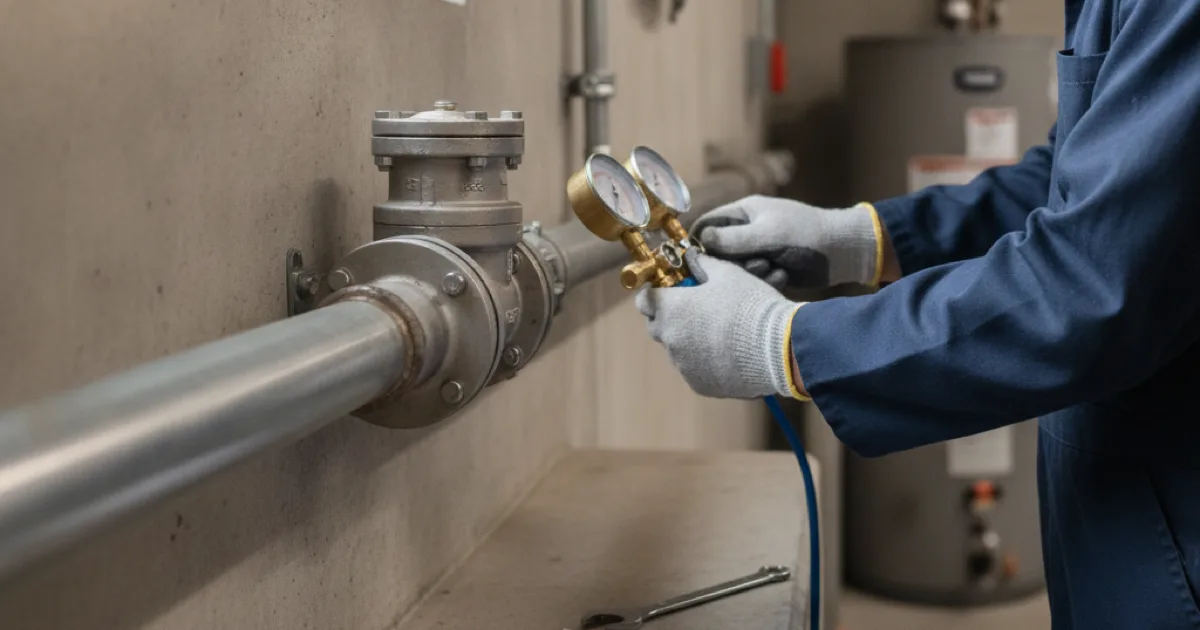
A backflow test is quick and non-disruptive. A certified tester attaches gauges to the assembly, briefly closes and opens valves in sequence, and confirms the internal check valves and relief valve are holding as they should.
The water is off to that assembly for a few minutes during the test. If it passes, we complete and file the test report with your water authority — the part that actually satisfies the requirement. If it fails, the assembly needs repair or replacement, and we will explain exactly what and why before doing anything.
The paperwork side matters as much as the test. A passed test that is not filed does not meet the requirement, so we handle the report rather than leaving you to chase it. Backflow work is one part of the commercial plumbing compliance small businesses here regularly need to stay on top of. The EPA explains why cross-connection control and backflow prevention matter for anyone wanting the background.
What it costs and how often
A backflow test is quick and priced as its own service, including filing the report with your water authority — the part that actually meets the requirement. Testing is typically annual, and the authority usually sends a notice when yours is due.
If the assembly passes, that is the whole job. If it fails, it needs repair or replacement and a re-test, and we explain exactly what and why before doing anything. Missing a required test can mean penalties or an effect on your water service, so it is worth handling promptly.
What to expect on the day
There is little to prepare for. The water is off to that one assembly for a few minutes while a certified tester attaches gauges and checks that the internal valves are holding as they should.
For a commercial premises we schedule around your trading hours where we can. Afterwards you get confirmation the test passed and the report filed — not a passed test left sitting on a clipboard, which does not satisfy anyone.
Common questions
I got a notice but nothing is wrong. Why do I need this?
A testing notice is routine, not a sign of a fault. It confirms an existing backflow preventer still works, since its internal parts can wear. Passing is the normal outcome.
Does my house need backflow testing?
Most ordinary homes do not, unless they have an irrigation system, a boiler, a pool, or a similar connection that triggers the requirement. If you received a notice, you have a device that needs testing.
How long does the test take?
The test itself is quick — a matter of minutes, with the water off to that assembly briefly. Filing the report is part of what we do, and satisfies the requirement.
What if it fails?
The assembly needs repair or replacement, and then a re-test. We will explain what failed and the options before proceeding, with the price upfront.
Do you file the report with the water authority?
Yes. That is the part that actually meets the requirement, so we handle it rather than leaving you to. A passed test that is never filed does not count.
Test, pass, filed — sorted
Licensed, insured, and handling the paperwork with the test.