Bathroom Plumbing Remodeling in Westchester County, NY
The plumbing in a bathroom remodel happens in two visits and gets buried in between. Getting the first visit right is what makes the finished room work.
- Licensed & Insured
- Upfront Pricing
- Clear Explanations Before Work Begins
- 15+ Years of Experience
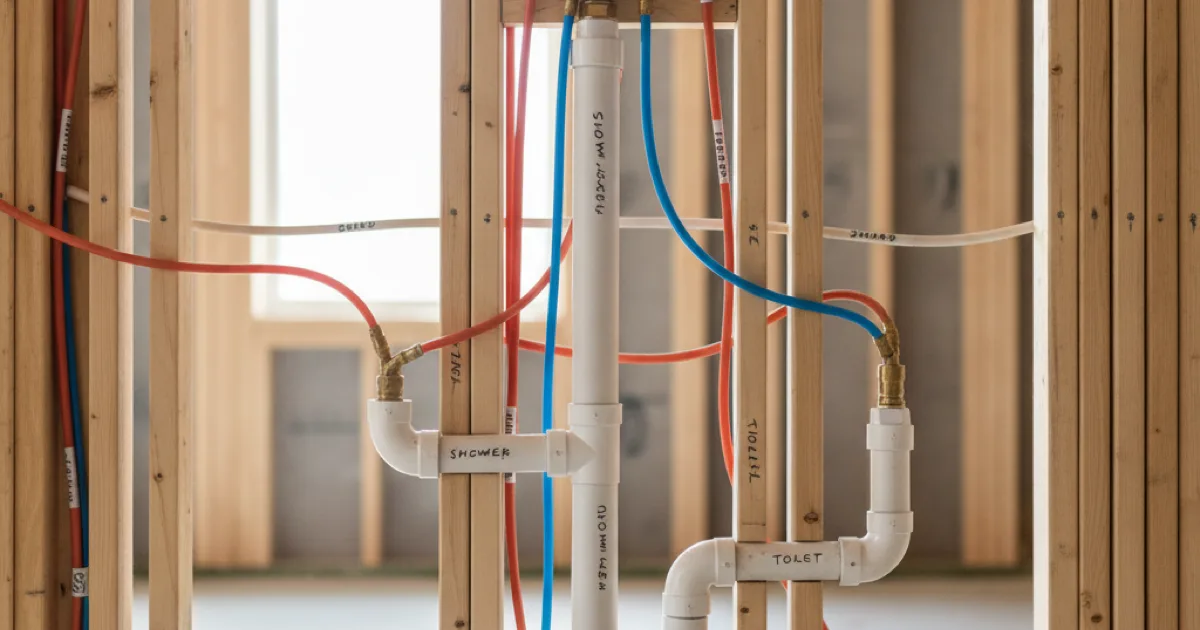
The rough-in is the whole game
Rough-in is the plumbing that goes in while the walls and floor are open, before anything is tiled or closed. It is invisible in the finished bathroom, and it is where the room is quietly made to work or not work.
The parts that get set now and cannot easily change later:
- Supply lines to each fixture, sized and positioned for what is going where.
- Drain and waste lines, with the correct fall so everything drains properly.
- Venting, so drains flow without gurgling and traps do not siphon dry.
- The shower valve body, set at the right depth for the finished wall — a common and miserable thing to get wrong.
- Blocking and support for anything wall-hung.
This is also the one moment to deal with old pipe cheaply. If the existing supply lines are original and near the end of their life, open walls are the least expensive look you will ever get at them. Some of the finish work also depends on getting valve work behind the wall right the first time.
Moving fixtures, and what it costs you
Not all fixtures are equal to move, and knowing the order of expense before you finalise a layout saves real money.
A sink is the easiest. Supply and drain are flexible enough that shifting it is usually straightforward.
A shower or tub is more involved, because the drain has to move and keep its fall, and that often means opening the floor.
A toilet is the most expensive to relocate. Its drain is the largest, needs the most fall, and moving it more than a little usually means re-cutting into the floor structure. A layout that keeps the toilet where it is will almost always cost less than one that does not.
None of this rules out an ambitious layout. It just means the plumbing cost of a layout is worth knowing while it is still a drawing, not after the tile is ordered. The National Association of the Remodeling Industry has general guidance on planning a remodel that is a sensible starting point for thinking through the whole project.
How it fits the rest of the job
We are the plumbers on a bathroom project, not the general contractor, and the plumbing comes in two visits with everyone else’s work between them.
- Rough-in after demolition, before the walls close.
- Inspection, where the work is permitted — before anything is covered.
- Tile, drywall, paint — other trades, the long stretch.
- Trim-out at the end — fixtures, faucets, and final connections.
Tile, carpentry, and design are separate trades we work alongside rather than replace. For the wider view of the bathroom plumbing services overall we cover, that is all set out in one place.
What affects the cost
The plumbing cost of a bathroom project is driven mostly by how much moves. Keeping fixtures where they are means reconnection; relocating them means new supply, drain, and venting.
The single biggest factor is moving the toilet, because its drain is the largest and needs the most fall. A layout that keeps the toilet in place almost always costs less than one that does not, which is worth knowing while it is still a drawing.
The chance to fix old pipe
Open walls are the cheapest look you will ever get at your bathroom’s plumbing, so a remodel is the moment to deal with tired supply lines rather than paying to reach them again through finished tile in a few years.
If the existing pipe is original and near the end of its life, replacing it now is a small addition to a job that already has the walls open. If it is recent and sound, we will tell you to leave it rather than sell you work you do not need.
Common questions
Do you do the whole remodel or just the plumbing?
The plumbing side, in full — rough-in through trim-out. Tile, carpentry, drywall, and design are separate trades, and we work alongside your contractor rather than claiming a scope we do not cover.
Can I move the shower to where the tub is?
Usually, yes, though the drain has to move and keep its fall, which may mean opening the floor. It is very doable — worth pricing before it is final so there are no surprises.
Should I replace the old pipes while the walls are open?
If they are original and aged, yes — this is the cheapest that job will ever be. If they were done recently and are sound, no. We will tell you which you have.
Do I need a permit?
For relocating fixtures or altering waste and vent lines, usually yes; for a like-for-like swap in place, often not. It varies by municipality here and we confirm what applies at your address.
How long is the plumbing part?
A short visit at rough-in and another at trim-out. The gap between them belongs to tile and drywall, so the overall timeline depends more on your contractor’s schedule than ours.
Get the hidden part right
Licensed, insured, and thinking past the tile.