Boiler Installation in Westchester County, NY
A boiler going into an older house has to work with what is already there — the radiators, the piping, the chimney. That is where these jobs succeed or go wrong.
- Licensed & Insured
- Westchester County Licensed Plumber
- Upfront Pricing
- Clean, Respectful Technicians
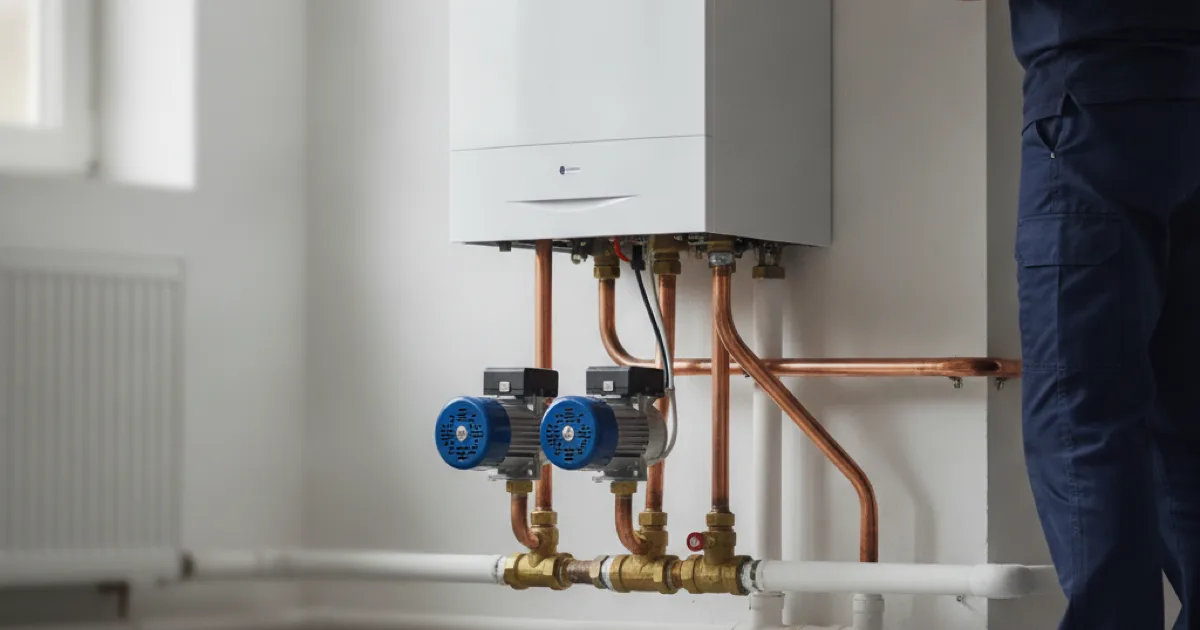
Fitting a new boiler to an old system
A lot of housing stock in this county was built with hydronic heat and still runs on it — cast iron radiators, baseboard, or in older houses one-pipe steam. A new boiler has to suit what it is connected to, not just the square footage.
The distinction that matters most is steam versus hot water. They are different systems with different boilers, and a house with steam radiators cannot simply take a hot water boiler. Converting between them is a major project rather than a swap, and anyone quoting otherwise has not looked properly.
Beyond that, older systems bring their own considerations. Existing radiators have a fixed heat output that constrains what water temperature the system needs to run at. High-efficiency condensing boilers only reach their rated efficiency at lower return temperatures, so pairing one with radiators sized for a much hotter system does not deliver the savings on the brochure. That is worth knowing before choosing, not afterwards.
None of this rules out a modern boiler in an old house. It just means the sensible order is to look at the system first and pick the boiler second.
Why oversizing is the usual mistake
The most common fault we find in existing installations is a boiler far larger than the house needs, usually because it was matched to the old one rather than to the building.
That matters because an oversized boiler short-cycles. It satisfies the thermostat quickly, shuts off, cools, and fires again. Each start is where most of the wear and most of the inefficiency happens, so an oversized unit costs more to run and wears out sooner while heating the house less evenly.
It is easy to see how it happens. Houses get insulated, windows get replaced, and the actual heat loss drops considerably over the decades — but the replacement boiler gets matched to the nameplate of the unit coming out. A proper heat loss calculation is the fix, and it frequently comes out well below what is already installed.
ACEEE has a readable overview of how home heating systems compare on efficiency in practice if you want context on where the real savings come from before committing to a system.
What the job involves
- Survey the existing system. Steam or hot water, radiator type and capacity, pipe layout, venting route, and the condition of what stays.
- Heat loss calculation. Sizing from the building, not from the old nameplate.
- Check the gas supply. A new boiler may need different capacity, which sometimes means work on the gas line feeding it as part of the same job.
- Remove the old unit and deal with what it was connected to — often the point where tired valves and circulators become visible.
- Set and pipe the new boiler, including near-boiler piping, which on steam systems in particular has to be done exactly right or the system never works properly.
- Venting, which for a condensing boiler usually means a new sealed route rather than the existing chimney.
- Commission, balance, and inspect. Fire it, set controls, balance the system, and complete the permitted inspection.
If your hot water currently comes off the boiler through an indirect tank, that is part of the same conversation. Where a household would be better served separating the two, we will say so — sometimes separate water heater work alongside a smaller boiler is the better arrangement.
What affects the cost
A boiler installation is priced from the survey, not a catalogue, because so much depends on what it connects to. We size from the building rather than matching the old nameplate, which often lands lower than what is already there.
Main factors: steam versus hot water, the boiler type and efficiency, whether the gas line and venting need work, and the condition of the near-boiler piping and controls that stay. A high-efficiency unit only pays back if your radiators can run at the lower temperatures it needs, which we check rather than assume.
Planning the replacement
The best time to replace a boiler is before it fails, not during a January cold snap. Planning it for milder weather means the heat can be off for the day or so the work takes without anyone suffering for it.
If yours is old but still working, there is no need to rush — but it is worth knowing its condition so the decision is yours to make on your schedule rather than forced by a breakdown at the worst possible time.
Common questions
How long does a boiler last?
Cast iron boilers commonly run for decades, often outliving expectations considerably. Modern high-efficiency units generally have shorter lives but cost less to run. Which works out better depends on how long you plan to stay.
Can I replace a steam boiler with a hot water one?
Not as a swap. The radiators, piping, and venting are all different. Converting is a major project, and in most houses replacing like for like is the sensible answer.
Is a high-efficiency boiler always worth it?
Not always. It reaches its rated efficiency at lower water temperatures, which depends on your radiators being able to heat the house at those temperatures. In some older systems a conventional boiler is the more honest choice.
How long is the heat off during a replacement?
Usually a day or so for a straightforward like-for-like swap. Longer if venting or gas work is involved. We schedule these for milder weather wherever possible for obvious reasons.
Do you service boilers as well as install them?
We handle the plumbing and gas side, including piping, connections, and controls. For annual combustion servicing on some units a heating specialist is better placed, and we will say so rather than stretch.
Plan it before you need it
Licensed, insured, and sizing from your house rather than the old nameplate.