Emergency Plumbing Repair in Westchester County, NY
Water going somewhere it shouldn’t is stressful. Call us, and we’ll tell you how to stop it right now over the phone — then get out to you and fix it properly.
- Licensed & Insured
- Same-Day Service Available
- Upfront Pricing
- Clean, Respectful Technicians
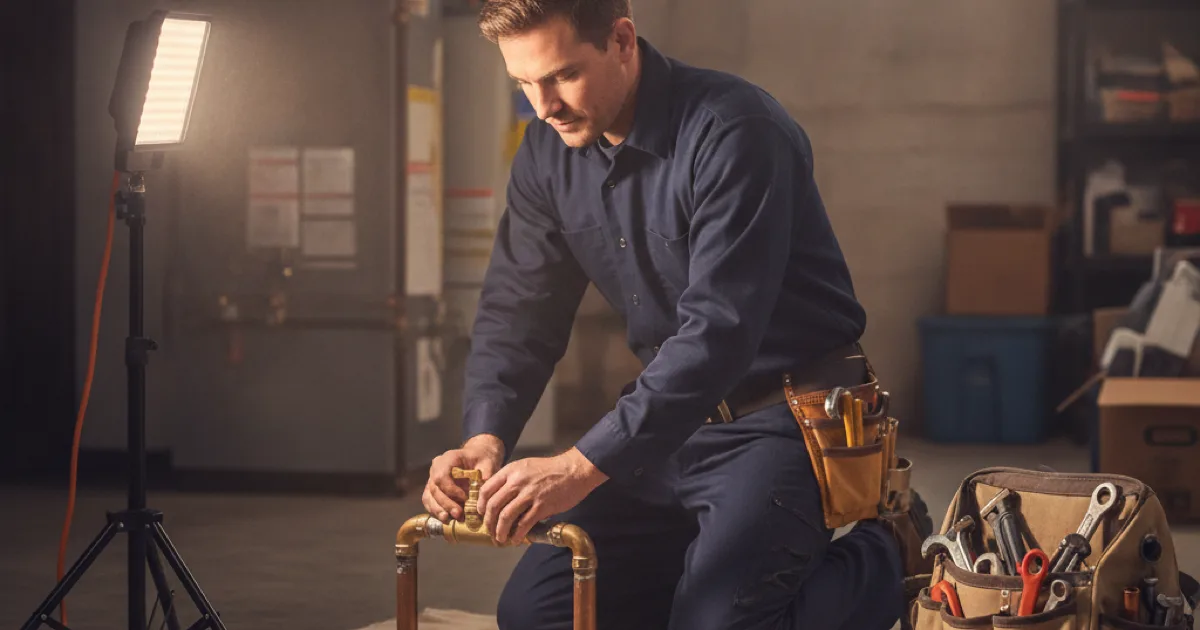
Water running where it shouldn’t?
Call now and we’ll walk you through shutting it off while we head your way.
What actually counts as a plumbing emergency
A real plumbing emergency comes down to one question: is water actively causing damage, or is something unsafe? If yes, it needs attention now. If no, it can usually wait for a normal appointment and cost you less.
These are the ones worth calling about immediately:
- Water coming through a ceiling or running down a wall.
- A burst or split pipe — especially a pipe that lets go suddenly with no warning at all.
- Sewage backing up into a tub, shower, or floor drain.
- No water at all in the house, or a break in the main line that’s flooding your yard or street.
- Any smell of gas near a water heater or boiler. Leave the house first, then call the gas utility, then call us.
- A water heater that’s leaking from the tank body rather than a fitting.
Notice what’s not on that list: a dripping faucet, a running toilet, one slow drain, or low pressure at a single fixture. Those are worth fixing, and we fix them — but paying emergency attention for them rarely makes sense, and we’ll tell you so on the phone rather than sell you a visit you don’t need.
Why these things happen here
Westchester housing gives us a fairly predictable set of emergencies, and the season usually tells you which one you’re dealing with.
Cold snaps
The single biggest driver of winter emergency calls around here is a hard freeze after a mild stretch. Pipes running through an unheated crawlspace, an attached garage, or an exterior wall freeze, expand, and split. Often the split isn’t obvious until things thaw and water starts moving again — which is why winter pipe failures frequently get discovered hours after the cold has already passed.
Older supply lines
Plenty of homes in this area still have their original galvanized or early copper supply piping. That piping doesn’t fail politely. It thins from the inside over decades and then goes at a single weak point, usually at a joint or a bend.
Finished basements
A finished basement turns a small leak into an expensive one. Water gets behind drywall and under flooring before anyone notices, and the damage bill ends up larger than the plumbing repair by a wide margin. If your basement is finished, it’s worth knowing where your shut-off is before you ever need it.
What to do before we arrive
This is the part most people have never been told, and it matters more than how fast anyone drives. Minutes of water shut off early saves thousands in damage later.
1. Shut off the water
For a fixture — a toilet, a sink — there’s usually a small valve on the wall or floor right below it. Turn it clockwise until it stops.
For anything bigger, you want the main shut-off for the whole house. In most homes around here it’s in the basement or utility area, on the wall facing the street, near where the water meter sits. It will either be a lever you turn a quarter turn, or a round handle you turn clockwise several times. If you’ve never located yours, This Old House has a clear walkthrough on finding and shutting a main water valve, and it’s genuinely worth five minutes on a calm day rather than a wet one.
2. Kill the power if water is near it
If water is anywhere near outlets, a panel, or a furnace, shut that circuit off at the breaker — but only if you can reach the panel without standing in water. If you can’t, leave it, get out, and tell us when we arrive.
3. Turn off the water heater
If you’ve shut the main off, switch the water heater off too. For gas, turn the dial to “pilot.” For electric, flip its breaker. A heater firing with no water coming in can damage itself.
4. Move what you can, then stop
Get belongings up off the floor and put towels down. Then stop. Don’t start pulling up flooring or cutting drywall — it rarely helps, and it can make it harder for us to trace where the water is actually coming from.
Not sure whether to shut the whole house off?
Call us. We’ll figure it out with you on the phone.
What happens when we get there
Emergency work still gets the same approach as everything else we do. We find the actual cause, explain what we found, and give you the price before we start.
- Stop the water. If it’s still running when we arrive, that comes first, before any diagnosis.
- Find the real source. Water travels along joists and pipes, so where it appears often isn’t where it started. We trace it back rather than guessing at the nearest wet spot.
- Explain what we found, and the options. Sometimes there’s a proper repair and a cheaper temporary one. You get to hear both, along with what each realistically buys you.
- Give you the price first. Upfront, before work starts — not after, and not as a surprise at the end.
- Do the repair and clean up. We take the mess with us. An emergency call is already a bad day; you shouldn’t be cleaning up after us on top of it.
If the fix needs a part nobody stocks at 9pm, we’ll say that plainly, make the situation safe and dry, and come back to finish properly rather than improvising something that fails again next month. You can see everything else we take care of if the problem turns out to be part of something larger.
When it can honestly wait until morning
Most plumbers won’t put this on a page, because a page about emergencies is supposed to make everything sound like one. But knowing what can wait saves you money, and we’d rather you trust what we tell you.
These can almost always wait for a normal appointment:
- A toilet that runs but still flushes, and isn’t leaking onto the floor.
- A dripping faucet, indoors or out.
- One slow drain, when the rest of the house drains fine.
- A water heater that’s making noise but still producing hot water.
- Low pressure at a single fixture.
And one that catches people out: if every drain in the house is slow at once, that’s not five separate clogs. That’s usually the main line, and it does need attention before it backs up into the lowest fixture in the house.
If you’re not sure which category you’re in, call and describe it. We’ll give you a straight answer, including when the straight answer is “that can wait until Tuesday.”
Common questions
Are you available 24 hours a day?
We offer same-day service and emergency service, but we won’t claim to be a 24-hour operation when we’re not. Call and you’ll get a real answer about when we can be there. If something genuinely can’t wait and we can’t get to you in time, we’d rather tell you that immediately than leave you waiting on a promise.
What will an emergency repair cost?
It depends on what failed and how much access we need to reach it. What we can tell you is that you’ll get the price before we start the work, not after. If the cause isn’t visible until we open something up, we’ll stop and re-quote rather than continuing and surprising you.
I shut the water off and the leak stopped. Do I still need someone?
Yes, but you’ve bought yourself time and probably saved real money. A leak that stops when the water is off hasn’t repaired itself — it’s just waiting. Shutting off the main means you can schedule a normal appointment instead of an emergency one.
My basement is finished. Will you have to cut into the walls?
Sometimes, but we work to open as little as possible. We trace the leak to its actual source first, so that if something does need to be opened, it’s one deliberate spot rather than several exploratory ones. We’ll show you where and why before cutting anything.
Should I call my insurance company first?
Stop the water first, then call us, then your insurer. Most policies expect you to take reasonable steps to limit the damage, and shutting off the supply is exactly that. Photograph things before cleaning up — it takes a minute and helps your claim.
What if it turns out not to be a plumbing problem?
It happens more than you’d think — water on a basement floor can be groundwater rather than a pipe, and a ceiling stain can be a roof. If that’s what we find, we’ll tell you, and point you toward the right trade instead of finding something plumbing-related to charge you for.
We’re here when it goes wrong
Licensed, insured, and local. Call and we’ll tell you honestly how soon we can be there.