Gas Line Repair in Westchester County, NY
If you smell gas, leave the building and call your gas utility from outside — before you call us. Once the property is safe, the repair is our job.
- Licensed & Insured
- Westchester County Licensed Plumber
- Upfront Pricing
- Clear Explanations Before Work Begins
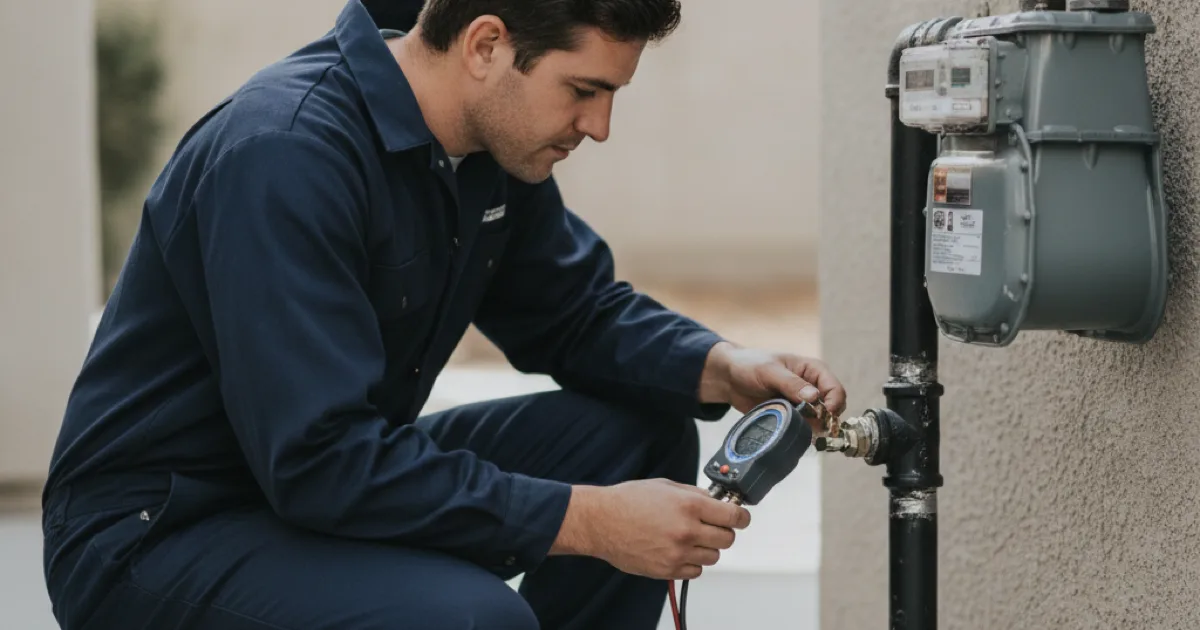
Signs of a gas problem
The obvious one is smell — the rotten-egg odour added to natural gas specifically so leaks get noticed. If you smell it, act on it. It’s there to be believed.
The less obvious signs are worth knowing too:
- Hissing near a pipe, valve, or appliance connection, audible with the house quiet.
- A gas bill that climbs with no change in use. Often a failing appliance, but sometimes a small leak.
- Dead or dying vegetation in a line over a buried gas run, in a strip rather than a patch.
- Yellow or orange burner flames where they should be crisp blue, or soot around an appliance — a combustion problem rather than a leak, but one that needs attention.
- Pilot lights that keep going out for no clear reason.
Combustion problems matter for a reason beyond the appliance itself: incomplete combustion produces carbon monoxide, which has no smell at all. The CDC’s guidance on carbon monoxide and home heating appliances is worth reading if you have any gas appliance in the house, and a working CO alarm is the cheapest safety device you will ever buy.
Property already made safe?
Then the repair is ours. Call and we’ll get it sorted properly.
What actually goes wrong
Gas piping is durable and most of it outlives the people who install it. When it does fail, it’s usually one of a handful of causes.
Corrosion on older black iron, particularly where pipe runs through a damp basement, passes through a wall, or enters the ground. Threaded joints are where it shows first.
Joint compound that has aged out. The sealant on threaded connections doesn’t last forever, and a joint that was sound for thirty years can start weeping.
Physical damage. A line knocked during other work, something hung off a pipe that shouldn’t be, or an appliance moved without disconnecting properly. Buried lines get hit during landscaping and fence installation more often than you’d think.
Appliance connectors past their life. Older flexible connectors, especially uncoated brass ones from certain eras, are a known weak point and are worth replacing on sight rather than waiting.
Undersized pipe. Not a failure exactly, but a real problem — adding appliances to a system never designed for the load starves everything on the line. It shows up as appliances that underperform when several run at once, and the fix is upsizing rather than repair.
How a repair is done
- Isolate the section. Gas off at the appropriate valve before anything is opened.
- Locate the leak properly. A leak-detection solution or an electronic detector, joint by joint. Guessing at the nearest fitting is how you repair the wrong thing.
- Repair or replace the affected run. Sometimes a single joint is remade; sometimes a corroded length has to go. We’ll show you what we found and why we’re recommending one over the other.
- Pressure test. The system is tested and held, not just checked with soap and called done.
- Permit and inspection where your municipality requires it — which for gas work is usually.
- Relight and verify appliances. Pilots relit, burners checked, and everything confirmed working before we leave.
A good share of our gas work arrives attached to something else: gas-fired boiler work regularly needs new or modified piping, and converting a water heater to tankless often needs the line upsized for the higher input. For the wider picture on how we approach this side of the trade, including the licensing that sits behind it, see our gas fitting services.
What affects the cost
A gas line repair is priced on what failed and where, and we give you the number before starting. Locating and remaking a single accessible joint is a small job; replacing a corroded or buried run is larger.
Because gas work is permitted and inspected in most municipalities here, that is part of the cost and part of what we handle. A quote that looks unusually cheap sometimes turns out to be a quote for unpermitted work, which surfaces later at the worst time — during a sale or a claim.
Gas safety at home
A working carbon monoxide alarm is the cheapest safety device you will ever buy, and every home with a gas appliance should have one, because incomplete combustion produces CO, which has no smell at all.
Learn where your gas shut-off is, treat the rotten-egg odour as real every time, and have appliances and connections checked rather than ignored when something seems off. Old brass flexible connectors in particular are a known weak point worth replacing on sight.
Common questions
Should I call the gas company or a plumber first?
The gas utility, from outside the building, if you smell gas. They can shut supply at the meter and confirm the property is safe, and they don’t charge for it. We’re the right call for repairing the line afterwards.
Do I need a permit for a gas line repair?
In most Westchester municipalities, yes, and the work is inspected. Requirements vary between towns and villages, so we confirm what applies at your address and handle it as part of the job.
How long does a repair take?
Locating and remaking a single accessible joint is often a short visit. Replacing a buried run, or work needing inspection before being closed up, takes longer. We’ll give you a realistic picture once we’ve seen it.
Can I add a gas line for a range or outdoor grill?
Yes, and it’s common work — but it’s permitted, inspected work rather than a DIY project, and the existing system needs checking to confirm it can carry the extra load.
Is a small gas leak actually dangerous?
Yes. Gas accumulates in enclosed spaces, and the risk isn’t proportional to how strong the smell is. There is no version of this worth monitoring for a while to see how it develops.
Gas work, done properly
Licensed, permitted, pressure-tested, and signed off.