Leak Detection in Westchester County, NY
Water travels before it appears. The stain on your ceiling is rarely above the leak, which is why finding it properly matters more than opening the nearest wall.
- Licensed & Insured
- Upfront Pricing
- Clear Explanations Before Work Begins
- 15+ Years of Experience
The meter test you can do tonight
Before paying anyone to look for a leak, you can establish whether you have one at all. It takes two minutes plus a few hours of not using water.
- Turn off every tap and appliance that uses water. Make sure nobody flushes.
- Find your water meter and note the reading, including the small leak indicator dial if it has one.
- Leave it two or three hours. Overnight is better.
- Read it again.
If the reading moved, water left the system without anyone using it. That is a leak somewhere between the meter and your fixtures, and it is worth acting on.
One refinement worth doing: if you can shut the main valve where it enters the house and the meter still moves, the leak is on the supply line outside, before the house. That single test saves a great deal of searching indoors for something that is under the front lawn.
The EPA’s WaterSense programme has a good summary of how much water household leaks waste and how to check for them, including the toilet dye test, which catches the single most common silent water waster in any house.
Meter moving with everything off?
That is a real leak. Let us find it before it finds your drywall.
Signs of a leak you cannot see
- A water bill that climbs with no change in household use.
- Musty smell in one part of the house, particularly a basement or a closet backing onto a bathroom.
- Warm patches on a floor, which point at a hot water line rather than cold.
- Persistent damp at the base of a wall, or paint and plaster that keeps blistering after being repaired.
- Sound of running water when nothing is on.
- Water pressure that has quietly dropped over months.
- An area of lawn that stays green through dry weather, over the line from the street.
The reason to chase these rather than wait is straightforward: a slow leak causes far more expensive damage than a fast one, because nobody reacts to it. A burst pipe floods a room and gets dealt with that afternoon. A pinhole behind a wall soaks a stud bay for eight months.
How we narrow it down
The aim is always to open as little as possible, so we work from the least invasive method upward.
- Isolate. Meter tests and shutting sections off tells us whether the leak is supply or waste, hot or cold, inside or outside.
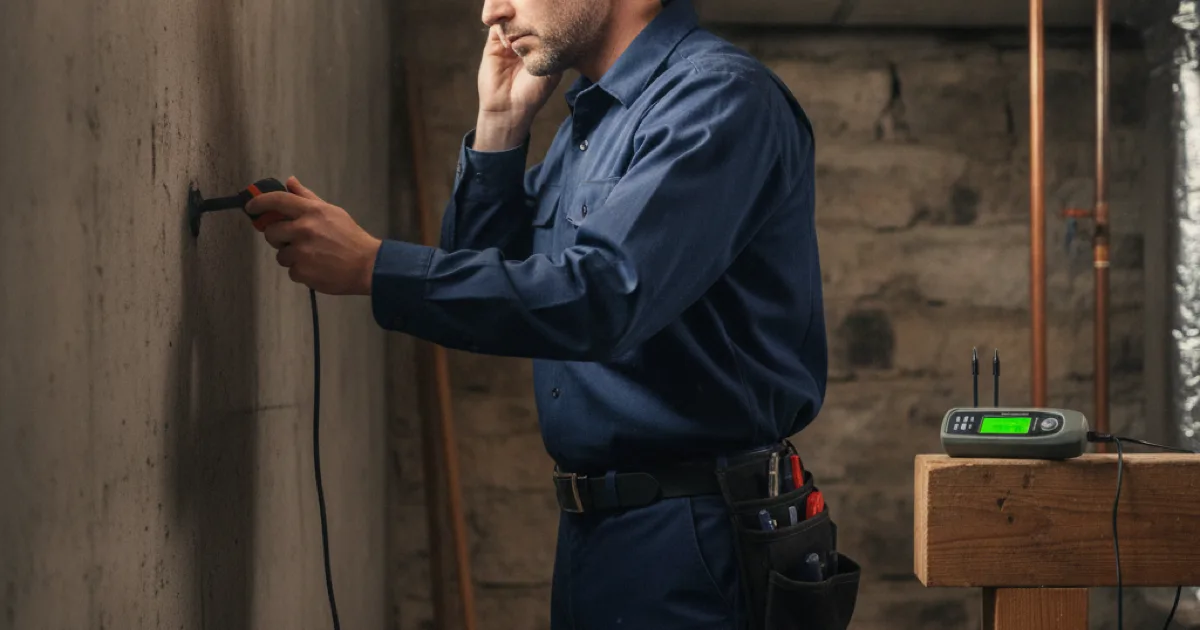
- Look and measure. Moisture meters read what is behind a surface without cutting it, and often disprove the obvious suspect.
- Listen. Pressurised leaks make noise. Acoustic equipment picks up what the ear cannot through floor and wall structure.
- Pressure test. Isolating a section and watching whether it holds narrows things to a specific run.
- Open one place, deliberately. When we do open something, it should be because we already know what is behind it.
Where the water is under a concrete floor, that becomes its own problem — leaks below the slab need locating precisely because the cost of guessing is much higher. Once we know where it is, repairing the pipe once we find it is usually the straightforward part of the whole exercise.
What affects the cost
Finding a leak and fixing it are two separate things, and we are clear about both before starting. Location itself is usually the smaller cost; the repair depends on where the leak turns out to be.
What moves it: how accessible the leak is once located, whether it is a supply or waste line, and whether reaching it means opening one deliberate spot or more. Because we locate precisely first, the repair is targeted rather than exploratory, which keeps it as small as it can be.
Catching leaks early
The reason to chase a hidden leak rather than wait is that a slow one causes far more expensive damage than a fast one, because nobody reacts to it. A burst floods a room and gets dealt with; a pinhole behind a wall soaks a stud bay for months.
A meter check every so often is worth the two minutes: with everything off, a moving meter means water is leaving the system somewhere. Catching that early is the difference between a small repair and a rebuilt ceiling.
Common questions
Can you find a leak without cutting into walls?
Usually we can locate it without opening anything, using meter isolation, moisture readings, acoustic equipment, and pressure testing. Repairing it generally does require access — but to one known spot rather than several hopeful ones.
My ceiling is stained but nothing above it uses water.
Common, and it usually means water is running along a joist or pipe from somewhere else, or that it is coming from the roof rather than the plumbing. Tracing it back is exactly what this service is for.
How much water does a small leak actually waste?
More than people expect. A running toilet alone can waste a startling volume continuously, which is why it often shows on a bill before anyone notices the sound.
Should I shut the water off while I wait?
If the leak is active and causing damage, yes. If it is slow and contained, you can usually keep using the house normally — just avoid the affected fixture where you can identify it.
Is a leak covered by homeowners insurance?
Policies often treat sudden damage differently from gradual damage caused by a long-running leak. What we can do is document clearly what we found and what failed; how it is covered is a question for your insurer.
Find it before it finds your floor
Licensed, insured, and opening as little as possible.