Low Water Pressure Repair in Westchester County, NY
Weak pressure is a symptom, not a diagnosis. The useful work is finding out why — and the answer ranges from a five-minute fix to a service-line replacement.
- Licensed & Insured
- Upfront Pricing
- Clear Explanations Before Work Begins
- 15+ Years of Experience
One fixture, or the whole house?
This single question narrows the problem down more than anything else, and you can answer it before we arrive.
One fixture with weak pressure is almost always local and cheap: a clogged aerator on a faucet, a blocked showerhead, or a partly closed shut-off valve under the sink. These you can often sort yourself in a few minutes.
The whole house with weak pressure points at something shared — the pressure regulator, the main shut-off not fully open, corroded supply piping, or the incoming supply line and main issues before the water even reaches the house. Bigger causes, and worth diagnosing properly rather than guessing at.
Only hot water weak, with cold fine, points at the water heater or the pipes immediately around it — sediment, a failing connection, or a partly closed valve on the hot side.
Pressure dropped across the whole house?
That one is worth diagnosing rather than living with.
The usual causes, cheapest first
We work through these roughly in order of cost, because there is no sense opening a wall when the answer is a cheap aerator.
- Clogged aerators and showerheads — mineral build-up, cleared or replaced in minutes.
- A partly closed valve — a main or fixture shut-off not fully open, sometimes since the last repair.
- A failing pressure regulator — the valve that controls incoming pressure can drift or fail, dropping the whole house.
- Corroded galvanised piping — internal narrowing that restricts flow, common in older homes and only truly fixed by replacement.
- A service line problem — a corroded, leaking, or undersized line from the street.
- Municipal supply — occasionally the pressure delivered to the property is genuinely low, which changes the solution to a booster rather than a repair.
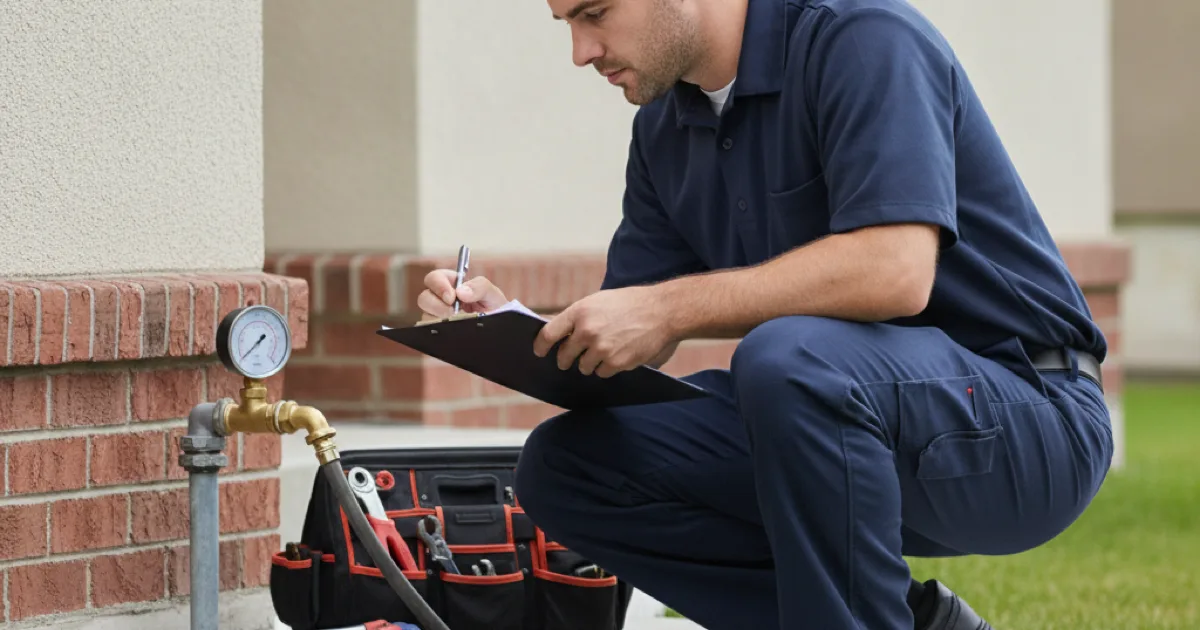
We measure actual pressure with a gauge rather than judging by feel, because “low” is subjective and the number tells us where to look. Family Handyman has a practical rundown of the common causes of low water pressure if you want to check a few of the simple ones yourself first.
When the problem is actually too much pressure
It is worth knowing that pressure can also be too high, and that causes more expensive problems than low pressure does.
Excessive pressure stresses every joint, fixture, and appliance in the house. It shortens the life of water heaters, washing machines, and dishwashers, and it is a common hidden cause of pipe failures and water hammer. If your pressure regulator has failed open, the house can be running well above what its plumbing was designed for without anyone noticing until something bursts.
A properly functioning regulator holds household pressure in a sensible range. When we check pressure, we are looking at both ends of the scale — and correcting high pressure is often what prevents a corroded-pipe repair from being needed at all.
How we track it down
Because the causes range from a five-minute fix to a service-line replacement, we work in the cheapest order that still gets a real answer. We measure actual pressure with a gauge first, then narrow down from there.
That means checking aerators and shut-off valves, testing the pressure regulator, and establishing whether the problem is inside the house or on the incoming supply before recommending anything larger. Measuring rather than guessing is what stops you paying for the wrong fix.
When it is worth a call
A single slow tap is usually something you can sort yourself, and we would rather you did. It is worth a call when the whole house has dropped, when pressure has fallen gradually over months, or when a sudden drop comes with a wet patch in the yard.
That last combination can mean a service-line break, which does not improve on its own and can undermine ground or waste a great deal of water. The rest are worth diagnosing so you are not living with something that has a straightforward cause.
Common questions
Can I fix low pressure at one tap myself?
Often yes. Unscrew the aerator and clean or replace it, check the shut-off valve is fully open, and for a shower, soak the head in descaler. If that does not do it, the cause is further back.
Why did my pressure drop suddenly rather than gradually?
A sudden change points at a specific event — a failed regulator, a valve knocked partly shut, or a new leak on the supply line. A gradual decline over years is more typical of corrosion narrowing the pipes.
Would a booster pump fix it?
Only if the cause is genuinely low incoming supply. Fitting a booster to a house whose real problem is corroded piping or a failed regulator just masks it. We establish the cause first.
Is low pressure ever an emergency?
Rarely on its own. But a sudden loss combined with a wet patch in the yard can mean a service line break, which does need attention before it undermines ground or wastes a great deal of water.
Can high pressure really damage things?
Yes, and it is underappreciated. It shortens appliance life and contributes to leaks and burst pipes. If we find it high, lowering it is cheap insurance against more expensive failures.
Find out why, then fix it
Licensed, insured, and measuring rather than guessing.