Shower Installation in Westchester County, NY
A shower that leaks does it behind the wall, out of sight, for a long time. Getting the plumbing and the waterproofing right is the whole job.
- Licensed & Insured
- Upfront Pricing
- Clean, Respectful Technicians
- 15+ Years of Experience
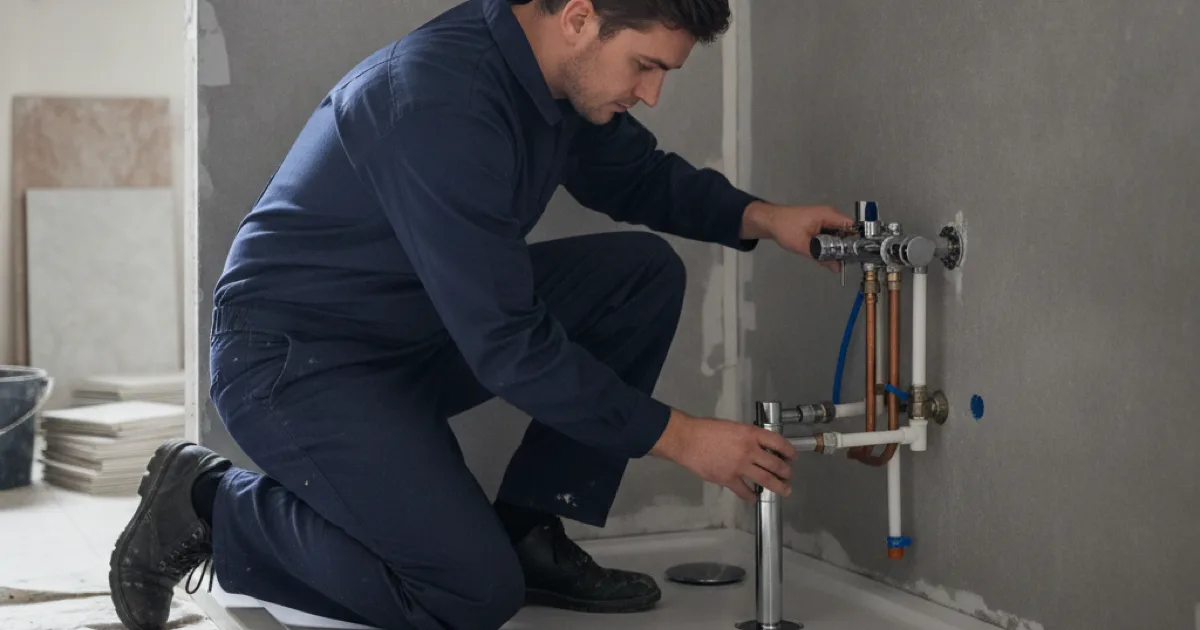
Our part, and where the tile setter takes over
A shower involves two trades and it helps to know the line between them. The plumbing — supply lines, the mixing valve, the drain, and the connections — is ours. The waterproofing, the pan or tray build-up, and the tile is a tile setter’s work.
Where the two meet is where showers leak, so the sequencing matters. We set the valve and drain at rough-in, the waterproofing goes over our work, and we return at the end to fit the trim and confirm everything runs. A shower that was plumbed and waterproofed by people who never spoke to each other is the classic hidden leak.
For a pre-made shower unit, more of it is ours, since there is no tile stage — we connect the supply, valve, and drain to the unit and seal it in. For a fully tiled custom shower, our part is the plumbing skeleton the tile setter builds on.
The valve decision to make early
The mixing valve is chosen and set before tiling, and changing it afterwards means opening a finished wall. It is worth a moment now.
- Pressure-balancing valves keep the temperature steady when someone flushes a toilet or runs a tap elsewhere. The sensible default, and code in many situations for exactly that anti-scald reason.
- Thermostatic valves hold a set temperature precisely and allow separate flow and temperature control. More expensive, nicer to use, common in higher-end bathrooms.
- Multiple outlets — a rain head plus a hand shower, or body jets — need a valve and supply sized to feed them, and enough water pressure to actually run them. Undersized, they disappoint.
If you are replacing a valve rather than doing a full install, that is replacing the valve at the same time as other work, which is often the sensible moment to do it.
Drains and the things that leak
The drain and its connection to the pan is the other place showers fail, and it is worth understanding what makes the difference.
The drain has to be the right type for the pan — a tiled shower on a mortar bed needs a different drain assembly from a moulded acrylic base, and using the wrong one is a slow leak waiting to happen. The connection between drain and waterproofing has to be watertight, because any water getting past the tile is meant to reach the drain through the membrane, not soak into the floor.
Good waterproofing practice is what stands between a shower and a rotted subfloor. The Tile Council of North America and building science sources describe the assemblies that last; This Old House has an accessible overview of how a shower is built to stay watertight if you want to understand what your tile setter should be doing over our plumbing.
A new shower is one piece of the rest of our bathroom plumbing, and it often arrives alongside a tub, a toilet, or a full remodel rather than on its own.
What affects the cost
A shower install is priced on the type and what it connects to. A pre-made unit is more contained; a fully tiled custom shower is a bigger plumbing skeleton with more connections and a tile setter’s work over ours.
Converting a tub to a shower usually moves the drain, since the two are not in the same place, and that can mean some floor work. We give you the number before starting and coordinate with whoever is tiling so the two trades line up.
Keeping it watertight
A shower that leaks does it slowly and out of sight, so the details we get right at install matter for years. The valve and drain connections are ours; the waterproofing and tile that keep water reaching the drain are the tile setter’s.
If an existing shower is leaking into the ceiling below, we trace it to the actual source — valve, drain connection, or failed waterproofing — rather than guessing, because the fix is very different depending which it is.
Common questions
Do you do the tile too?
No — tile and waterproofing are a tile setter’s trade. We do the plumbing: valve, supply, drain, and connections, plus the final trim. We coordinate with whoever is tiling so the two line up.
Can I convert a tub into a shower?
Usually, yes. The drain position often changes, since a tub drain and a shower drain are not in the same place, and that can mean some floor work. Very common, and worth pricing before deciding.
Why does my shower run out of pressure with the rain head?
Large or multiple heads need more flow than a standard supply always provides. It is worth checking your available pressure before choosing fixtures, so the shower performs the way it looks like it should.
My old shower leaks into the ceiling below. Is that the plumbing?
Could be the valve, the drain connection, or failed waterproofing behind the tile. We trace it to the actual source rather than guessing, since the fix is very different depending which it is.
How long does a shower installation take?
Our plumbing is a rough-in visit and a trim-out visit. The time in between belongs to waterproofing and tile, so the total depends on the tile schedule more than ours.
Sealed and connected right
Licensed, insured, and coordinated with your tile setter.