Shower Valve Replacement in Westchester County, NY
The valve is behind the tile, which is what makes replacing it feel daunting. Often it needs far less tile disturbed than you would fear — here is how it actually goes.
- Licensed & Insured
- Upfront Pricing
- Clean, Respectful Technicians
- 15+ Years of Experience
Cartridge, or the whole valve?
This is the distinction that decides how big a job it is, and the good news is that the smaller one covers most cases.
The cartridge is the part inside the valve that actually controls the water, and it is the part that usually wears out — causing drips, temperature problems, or a handle that will not turn smoothly. Replacing just the cartridge is done from the front, through the existing trim opening, with no tile removed at all. It is the most common shower valve repair and the least disruptive.
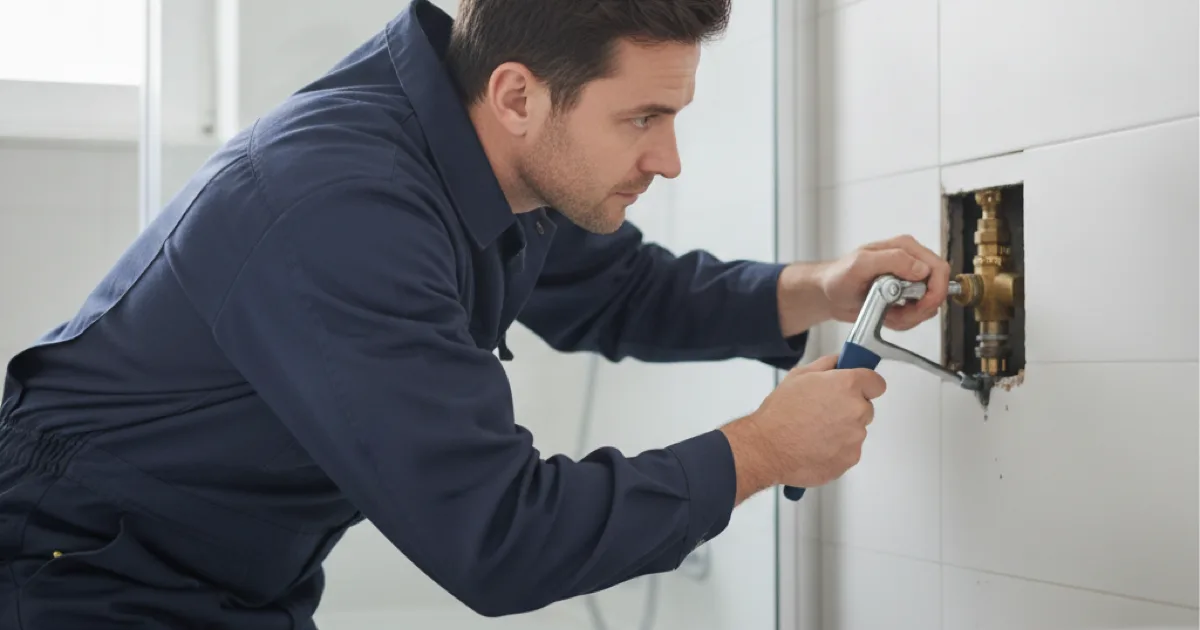
The whole valve body is behind the wall, and replacing it does mean access — but far less than people expect. It usually needs an opening roughly the size of the trim plate, often reachable from an access panel behind the wall rather than through the tile at all. We always look for the least destructive route in first.
Valve dripping or temperature wandering?
Often just the cartridge — no tile touched. Let us check.
The tile question everyone asks
“Will you have to smash my tile?” is the first thing we hear, and the honest answer is: usually not, and less than you fear when we do.
A cartridge swap touches no tile. A full valve replacement needs an opening, but the first place we look is behind the wall — many bathrooms have, or can easily be given, an access panel on the other side of the shower wall, often in a closet or hallway. Working from there, the tile is never touched.
Where the tile side genuinely is the only route, the opening is small and deliberate. This is also a strong argument for keeping a few spare tiles from any bathroom project, and for choosing a valve with a generous trim plate that covers a reasonable opening. If the bathroom is being redone anyway, doing the valve as part of a larger bathroom plumbing project means there is no tile to protect at all.
Signs the valve is going
- Dripping from the showerhead or spout when off — usually a worn cartridge.
- Temperature that wanders or will not get hot enough, a classic failing cartridge or a valve that needs adjustment.
- Scalding when a toilet flushes, which means the pressure-balancing function has failed — worth fixing promptly for safety.
- A handle that is stiff, loose, or does not fully shut off the water.
- Reduced flow from the shower specifically, sometimes scale inside the valve.
- Water damage appearing below or behind the shower wall, which can be a failed valve body rather than the tile.
The scalding one is worth acting on rather than living with. A valve that no longer balances pressure means someone can get a sudden burst of hot water when water is drawn elsewhere, which is exactly the hazard pressure-balancing valves exist to prevent. The CPSC and plumbing codes treat anti-scald protection seriously; This Old House covers what replacing a shower valve involves if you want to see the work before we do it.
What affects the cost
The cost turns entirely on cartridge versus whole valve. A cartridge replacement is a small job done from the front with no tile touched; a full valve body replacement needs access and takes longer.
Where access is through an existing panel behind the wall, even a full valve swap stays contained. Where tile genuinely has to be opened and later restored, a tile setter is a separate visit, which we will flag upfront rather than surprise you with.
Catching a failing valve early
A shower valve usually warns you before it fails completely — a drip when it is off, a temperature that wanders, or a handle getting stiff. Caught early, most are a tidy cartridge swap.
The one worth acting on quickly is scalding when a toilet flushes elsewhere, because it means the pressure-balancing function has failed. That is a genuine safety issue, especially for children and older adults, and a modern valve solves it.
Common questions
Do you always have to remove tile?
No. A cartridge replacement needs none. A full valve swap needs access, but we look for an access panel behind the wall first, and only open tile if there is genuinely no other route.
Can you match my existing trim?
Often the cartridge is replaceable while keeping your existing handle and trim, which avoids any visible change at all. If the whole valve is being replaced, trim usually changes, and we will talk through options that suit the tile.
My shower scalds me when someone flushes. Urgent?
Worth addressing promptly. It means the valve is no longer balancing pressure, which is a genuine scald risk, particularly for children and older adults. A modern pressure-balancing or thermostatic valve solves it.
Is a dripping shower worth fixing quickly?
Yes — a constant drip wastes water and often signals a cartridge on its way out. Caught early it is a small, tidy job.
How long does it take?
A cartridge swap is usually well under an hour. A full valve replacement with access is longer, and if tile has to be opened and later restored, a tile setter is a separate visit.
Fixed with less disruption than you expect
Licensed, insured, and part of bathroom plumbing we handle across the county.