Toilet Installation in Westchester County, NY
A toilet swap looks like the simplest job in plumbing, and often is — until the flange is corroded or the floor beneath is soft. Getting the base right is what makes it last.
- Licensed & Insured
- Upfront Pricing
- Clean, Respectful Technicians
- 15+ Years of Experience
Why the base matters more than the bowl
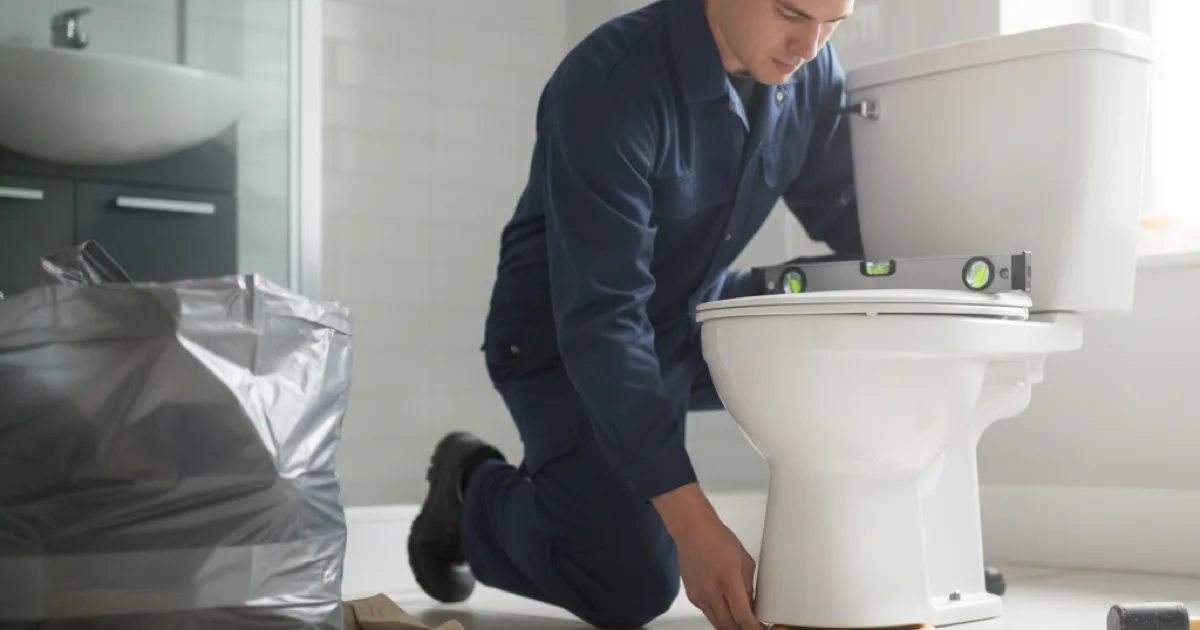
Any toilet will flush. What separates a toilet installation that lasts from one that leaks is entirely at the base, where the toilet meets the drain, and none of it is visible once the toilet is set.
The things that actually matter:
- The flange. The fitting that anchors the toilet to the floor and connects it to the drain. Corroded, cracked, or set too low from a new floor going over the old, it needs correcting before a new toilet goes on — not sealed over and hoped about.
- The seal. A wax ring or modern equivalent that seals toilet to flange. Get this wrong and it seeps with every flush, quietly, into the floor.
- A level, solid set. A toilet that rocks breaks its own seal over time. It needs to sit flat on a sound floor, shimmed and secured properly.
- The floor itself. If the old toilet was leaking, the subfloor underneath may already be soft. Setting a new toilet on a rotted floor just restarts the clock.
This is why we look under and around the old toilet as we remove it. A swap that ignores a failing flange or a soft floor is the kind of job that comes back.
Replace, or repair first?
Before installing a new toilet, it is worth being sure the old one actually needs replacing. Plenty of apparent toilet problems are cheap repairs, not replacements.
A running toilet, a weak flush, or a wobble are usually repairs before replacement — a flapper, a fill valve, or fresh closet bolts, at a fraction of the cost of a new unit. Replacement genuinely makes sense when the bowl or tank is cracked, when it clogs chronically no matter what, or when you simply want a more efficient or better-fitting model.
If you are updating a bathroom more broadly, a new toilet naturally folds into a full bathroom plumbing update rather than being a standalone visit.
Choosing one that fits
A few practical points save disappointment, and they are easy to get wrong buying online.
- Rough-in distance. The gap from the wall to the centre of the drain, usually around twelve inches but not always. Buy for the wrong rough-in and the toilet will not fit. Worth measuring before ordering.
- Bowl height. Comfort or “right” height models sit taller, which many people prefer and which suits older adults — but it is a personal choice worth making deliberately.
- One piece or two. One-piece toilets are easier to clean and have fewer seams to leak; two-piece are lighter to handle and usually cheaper.
- Efficiency. Modern low-flow and dual-flush toilets use far less water than older units without the weak flush the early ones were known for.
This Old House has a clear walkthrough of how a toilet is set and sealed, which shows why the flange and seal matter as much as the model. Tell us the rough-in and your preferences and we will confirm a model fits before it is bought.
What affects the cost
A straightforward replacement onto a sound flange is a short, inexpensive job, and we give you the price first. The cost rises when what is under the toilet needs attention.
A corroded or cracked flange, a soft subfloor from a long-running seal leak, or a change in rough-in distance all add to the job. We look underneath as we remove the old toilet rather than sealing a new one over a problem that will only come back.
Choosing an efficient model
Modern low-flow and dual-flush toilets use far less water than older units without the weak flush the early ones were known for, which adds up on the bill over the life of the fixture.
The one measurement to get right before buying is the rough-in — the distance from the wall to the centre of the drain, usually around twelve inches but not always. Tell us that and your preferences and we will confirm a model fits before it is ordered.
Common questions
Can you install a toilet I bought?
Yes, commonly. The one thing to get right before buying is the rough-in distance from the wall to the drain centre, since that determines whether it fits at all. Tell us and we will confirm.
Why does my toilet rock, and does it matter?
Loose bolts or an uneven floor. It matters because the rocking breaks the seal underneath, which then leaks into the floor. It is worth fixing before it becomes a subfloor problem.
The floor around my toilet feels soft. What does that mean?
Usually a long-running seal leak that has damaged the subfloor. A new toilet alone will not fix that — the floor needs addressing too, and we will tell you honestly what we find.
How long does an installation take?
A straightforward replacement onto a sound flange is usually well under an hour. A corroded flange, a soft floor, or a rough-in change adds time, which we will flag before starting.
Are low-flow toilets as good now?
Much better than the early ones that earned the poor reputation. A current efficient model flushes well and uses noticeably less water, which shows up on the bill over time.
Set right, sealed right, level
Licensed, insured, and part of everything we do in bathrooms.