Toilet Repair in Westchester County, NY
A running toilet is not just annoying — it can quietly waste more water than any other fixture in the house. Most are a straightforward fix.
- Licensed & Insured
- Same-Day Service Available
- Upfront Pricing
- Clean, Respectful Technicians
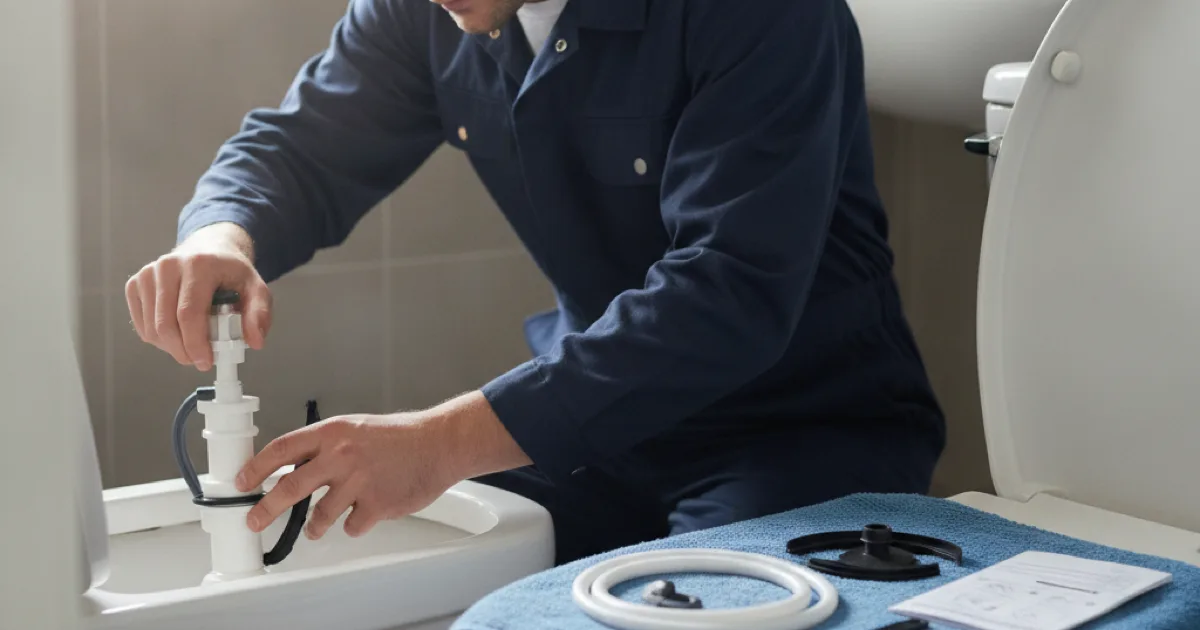
Why a running toilet matters
It is easy to ignore a toilet that runs on quietly, but the water it wastes is real and continuous. A silently running toilet can waste a startling volume over a month, and it usually shows up on the water bill before anyone notices the sound.
Here is a quick test for a leak you cannot hear: put a few drops of food colouring in the tank, wait fifteen minutes without flushing, and check the bowl. If colour has appeared, water is leaking past the flapper from tank to bowl — the most common cause of a running toilet, and usually a cheap part.
Most running toilets are fixed with inexpensive components: a flapper, a fill valve, or an adjustment to the float. Worth trying before assuming anything serious. The EPA’s WaterSense programme has guidance on how much water older and leaking toilets use, which is what makes this worth fixing promptly rather than living with.
Toilet running or leaking at the base?
One is cheap, the other needs looking at. We can tell you which.
Common problems and what they mean
- Runs constantly or intermittently — usually a worn flapper or a fill valve not shutting off. Cheap and quick.
- Weak or incomplete flush — often a flapper closing too early, a low water level, or blocked rim jets under the bowl rim.
- Water on the floor around the base — this one matters more. It can be a failed wax seal, a cracked bowl, or loose bolts, and left alone it rots the subfloor beneath.
- Rocks when you sit — loose closet bolts or a deteriorating flange. Worth fixing promptly, since the movement breaks the seal and causes the leak above.
- Phantom refills — the tank topping up on its own points to a slow flapper leak, the dye test above will confirm it.
- Sweating tank in summer — condensation rather than a leak, though it can look alarming and drip onto the floor.
The one to take seriously is water at the base. If a toilet is leaking onto the floor rather than internally, it can also be a symptom of a blocked line backing up — worth ruling out with our drain and clog work if the toilet is also draining slowly.
Repair or replace
Most toilets are worth repairing — the mechanisms are cheap and standard. Replacement makes sense in a narrower set of cases:
- A cracked tank or bowl. Not repairable; it will only get worse.
- Repeated clogs in one toilet that drains fine elsewhere, sometimes an old low-flow design or a blockage in the internal trap.
- Wobbling that has damaged the flange badly enough that resetting is involved anyway.
- Very old, inefficient units where a modern one pays back in water saved, if you were considering it anyway.
If you are replacing rather than repairing, that is replacing the toilet entirely, which is its own straightforward job — correct flange height, a fresh seal, and no rock.
What to try before you call
A running toilet is often a five-minute fix worth trying yourself. Take the tank lid off and look: a flapper that is not sealing, or a fill valve that will not shut off, are inexpensive parts and straightforward to swap.
The dye test settles a silent leak — a few drops of food colouring in the tank, and if colour reaches the bowl within fifteen minutes without flushing, the flapper is the culprit. If it keeps running after new parts, or there is water at the base, that is when to call.
What affects the cost
Most toilet repairs are inexpensive because the parts are cheap and standard, and we tell you the price before starting. A flapper, a fill valve, or fresh closet bolts are small jobs.
It costs more when the problem is at the base rather than in the tank — a failed seal that has been leaking into the subfloor, or a corroded flange — because that is where a repair becomes a reset or a floor question. We check underneath rather than just swapping the visible part.
Common questions
How much water does a running toilet actually waste?
A surprising amount — enough to show clearly on a water bill. It is one of the most common sources of an unexplained bill increase, and one of the cheapest to fix.
Can I fix a running toilet myself?
Often yes. A flapper or fill valve is inexpensive and the work is within reach of most people. If it keeps running after replacing those, or there is water at the base, that is when to call.
Water is pooling around the base. Is that urgent?
Fairly. A failed seal leaks a little with every flush and rots the subfloor over time. It is not a flood, but it is the kind of slow damage worth stopping sooner rather than later.
Why does only my toilet clog and nothing else?
Sometimes an old low-flow design, sometimes something lodged in the internal trap, sometimes what is being flushed. If more than one fixture is affected, though, the cause is the drain line rather than the toilet.
Should I repair an old toilet or replace it?
If the tank and bowl are sound, repair — the parts are cheap. Replace when it is cracked, chronically clogging, or so old that a modern efficient unit is worth it on water alone.
Stop the running and the waste
Licensed, insured, and often same-day for a simple fix.