Water Main & Water Line Repair in Westchester County, NY
The line bringing water into your house is one you own and rarely think about — until it leaks under the lawn or the pressure drops. Both are our work.
- Licensed & Insured
- Upfront Pricing
- Clear Explanations Before Work Begins
- 15+ Years of Experience
The part homeowners are surprised to own
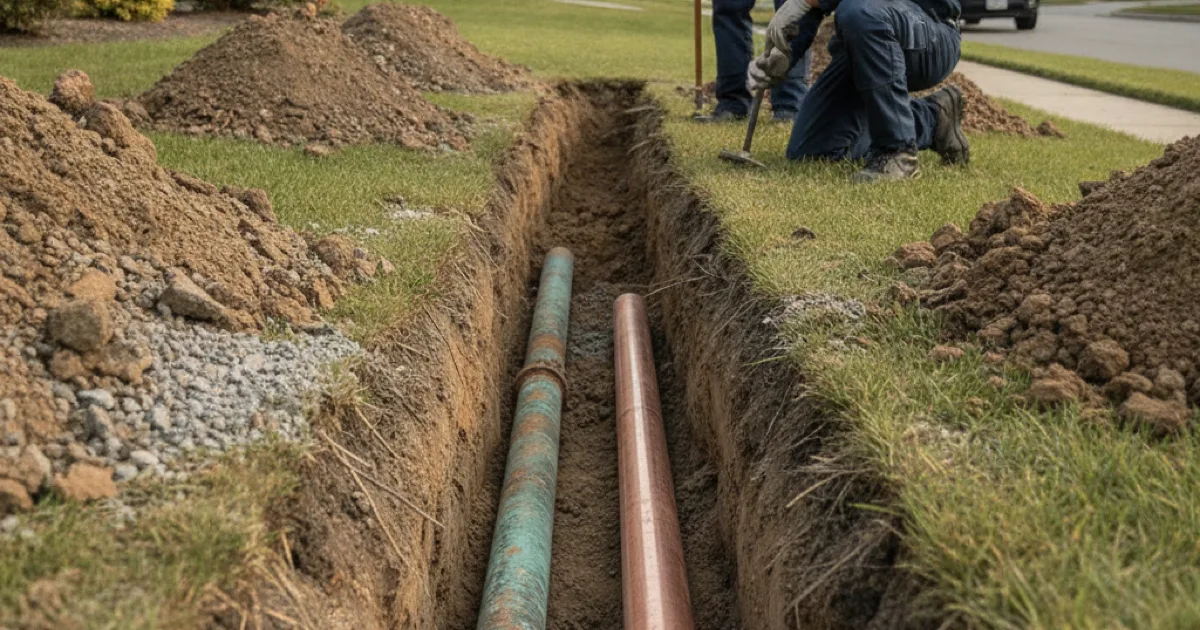
The water service line runs from the municipal main under the street to your house. Most people assume the water company owns all of it. In most municipalities here, the homeowner owns the portion from the property line, or from the curb stop, to the house — which usually means the run across your own yard is yours to maintain and repair.
It matters because a leak or break on that section is your responsibility and your bill, and it is not covered by a standard homeowners policy in many cases. Some water utilities offer a separate service-line protection plan; whether that is worth it is a personal call, but knowing the line is yours is the first step.
The exact ownership boundary varies by town and village here, so if you are dealing with a suspected service-line problem, confirming who owns which section with your municipality is worth doing early. We can point you at who to ask.
Wet patch in the yard that will not dry?
That can be the service line. Worth checking before it worsens.
Signs the service line is failing
- A patch of lawn that stays wet or unusually green through dry weather, often in a line from the street to the house.
- Water pressure that has dropped across the whole house, not at one fixture. A restricted or corroded supply line starves everything at once, which is where this overlaps with pressure problems across the house.
- A water bill climbing with no change in use, since a buried leak runs continuously.
- Rusty or discoloured water, which can indicate an old galvanised or iron service line corroding internally.
- Air spitting from taps or fluctuating pressure, sometimes a sign of a compromised line drawing air.
- A sinkhole or soft, sunken ground along the line, where water is washing soil away underground.
The meter test helps here too: with everything off, a moving meter means water is leaving the system. If it keeps moving after you shut the valve where the line enters the house, the leak is outside on the service line rather than indoors.
Repair and replacement
Once we have confirmed and located the problem, there is usually a choice, and the right one depends on the line’s age, material, and what sits over its route.
Spot repair where a single break or leak sits in otherwise sound pipe — excavate that section, repair, backfill.
Full replacement where the line is old galvanised or badly corroded and will keep failing. Modern replacements are usually copper or approved plastic, and this ends the recurring problem rather than deferring it.
Trenchless replacement in some situations, pulling a new line through with minimal digging — worth asking about where a driveway, mature planting, or hardscape sits over the route.
Service-line work is permitted in most municipalities here, sometimes with the water authority involved, and restoring the surface afterwards is part of the cost. We lay out the options with honest numbers rather than defaulting to the biggest dig. Bob Vila has a fair overview of what water main replacement involves if you want to understand the trade-offs before we talk.
How the work goes
Once we have confirmed the leak is on the service line and located it, the work is planned around what sits over the route. We expose the failed section, repair or replace it, pressure-test, and restore the surface.
Where a driveway or mature planting sits over the line, we will raise trenchless replacement as an option that avoids opening the whole run. It does not suit every situation, but it is worth asking about before committing to a full dig.
Knowing where your shut-offs are
A service-line problem is easier to handle if you already know where your main shut-off is and that it works. It is usually in the basement or utility area on the wall facing the street, near the meter.
It is worth finding and testing it on a calm day rather than during an emergency. A main valve that has not been turned in years sometimes will not fully close when you finally need it, and that is a much better thing to discover in advance.
Common questions
Is the water line under my yard really my responsibility?
In most municipalities here, the portion from the curb or property line to the house is the homeowner’s. The exact boundary varies, so it is worth confirming with your town — but the run across your own property is very often yours.
Will you have to dig up my whole yard?
Not necessarily. A spot repair is a contained excavation, and trenchless methods can replace a line with far less digging. We assess the route before deciding.
How urgent is a service line leak?
A slow one is not an emergency, but it wastes water continuously and can undermine ground or hardscape over time. A sudden loss of pressure or water is more pressing. Either way it does not improve on its own.
Could low pressure be the main rather than the house?
Yes, and telling them apart matters. If pressure is low everywhere and testing points to the incoming supply, the service line or a pressure regulator is the likely cause rather than internal plumbing.
Does insurance cover it?
Standard policies often do not cover the buried service line, though some carriers and water utilities offer specific protection plans. Worth checking your own coverage — that is a question for your insurer.
Sort the supply properly
Licensed, insured, and clear about what is yours to fix.